A Summer of Partnership on Our Public Lands
Published on
Feb 10, 2026
BY LAUREL BAUM, CENTRAL CASCADES WATERSHED MANAGER
As federal disruption reshaped how partnerships functioned and limited what agencies could carry forward, Conservation Northwest and our allies kept stewardship moving in ways that delivered real benefits for wildlife and communities.
Dispersed Recreation Improvements
Coming out of the spring we had a continuing project to improve site conditions at numerous dispersed recreation camp sites, in partnership with the Snoqualmie Ranger District recreation staff. To share with you a brief history of these sites; I would describe off road vehicles a few feet from the river’s edge causing long term damage to sensitive plant communities; deeply mudded wheel ruts sometimes three and half feet down; campsites with 3-4 user built fire rings all overflowing with semi burnt trash; large areas of compacted bare soil from the pressure of long term campers; and finally months’ worth of garbage and human waste left behind when users finally vacated a site.
Over the years, we have been making improvements to protect the environment and still work inside the Forest’s muti-use mandate to provide recreational opportunities to the public. This year however, no part-time seasonal employees were hired for the entire field season, a crucial role in managing our public lands and the USFS lost valuable staff in devastating Federal layoffs. With one week from a contracted Washington Conservation Corps crew and an additional week with the Youth Conservation Corp crews we got to work to make additional site improvements on the popular Greenwater river corridor.
Picnic tables were built at over 8 sites and steel fire rings installed, adding to the gravel tent pads previously installed and boulders delineating the parking areas, keeping vehicles on durable surfaces close to the system roads. While we’ve partnered on this dispersed camping corridor, this type of work requires ongoing upkeep due to heavy pressures and at times blatant abuse including illegal dumping and sometimes vandalism.
This singular recreational corridor provides an example of the same pressures that so many other river corridors across Washington are also contending with.
Elk Forage Units
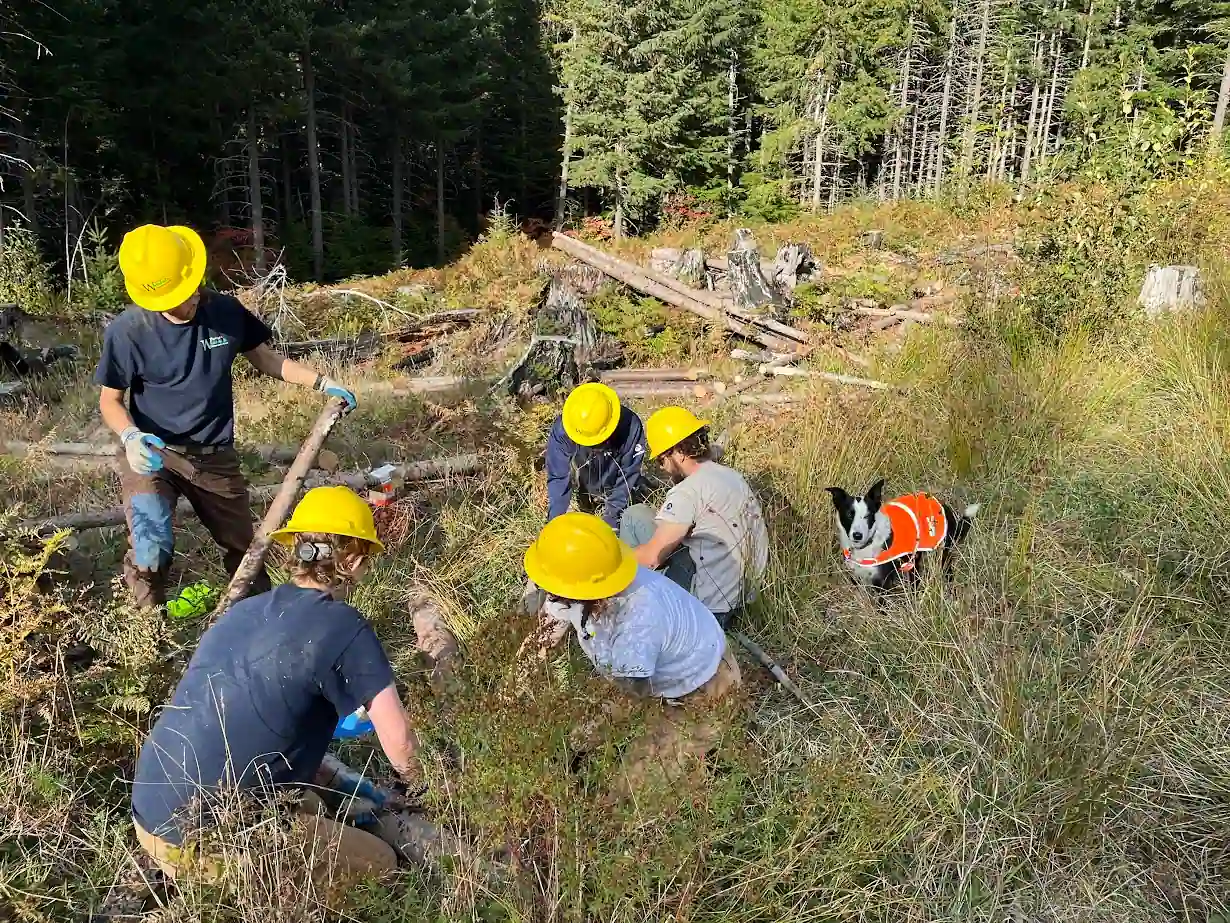
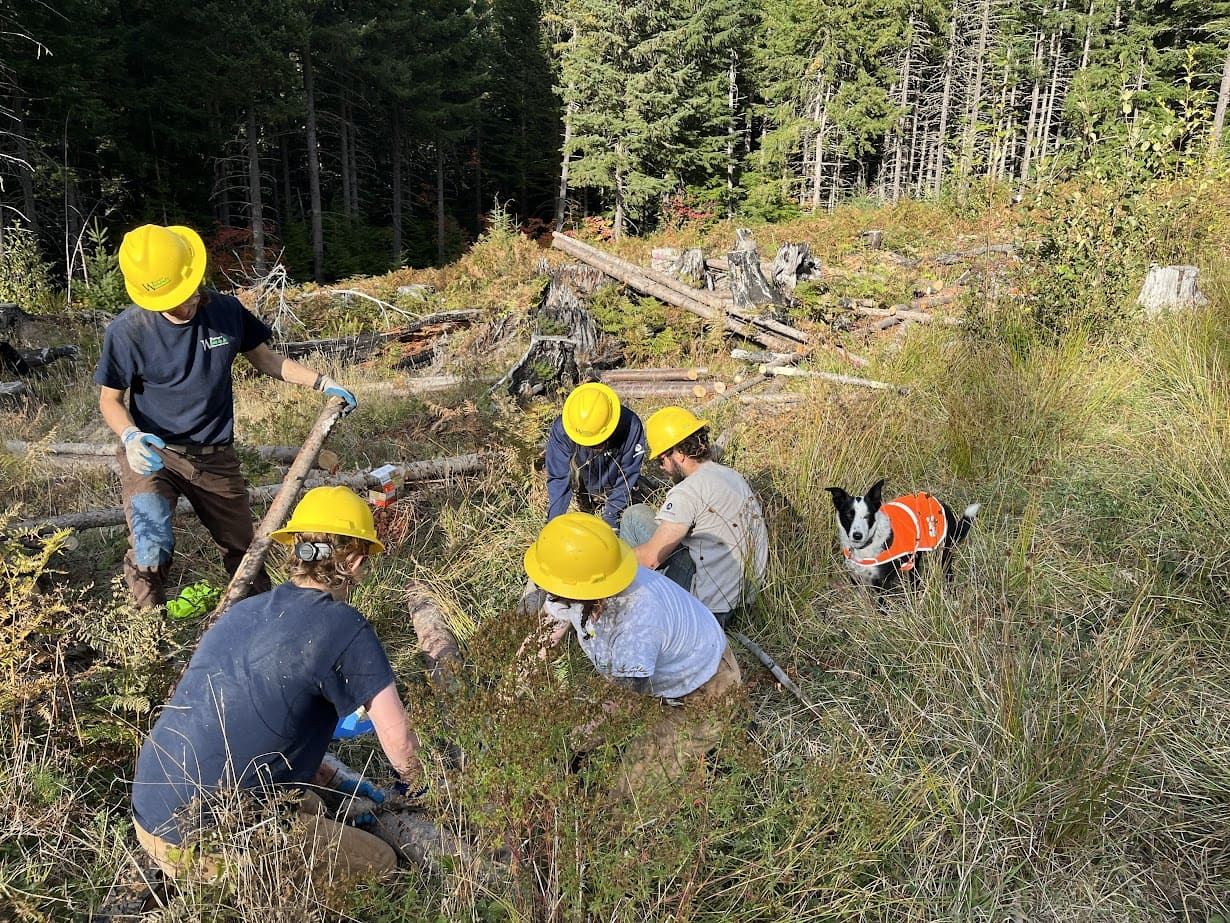
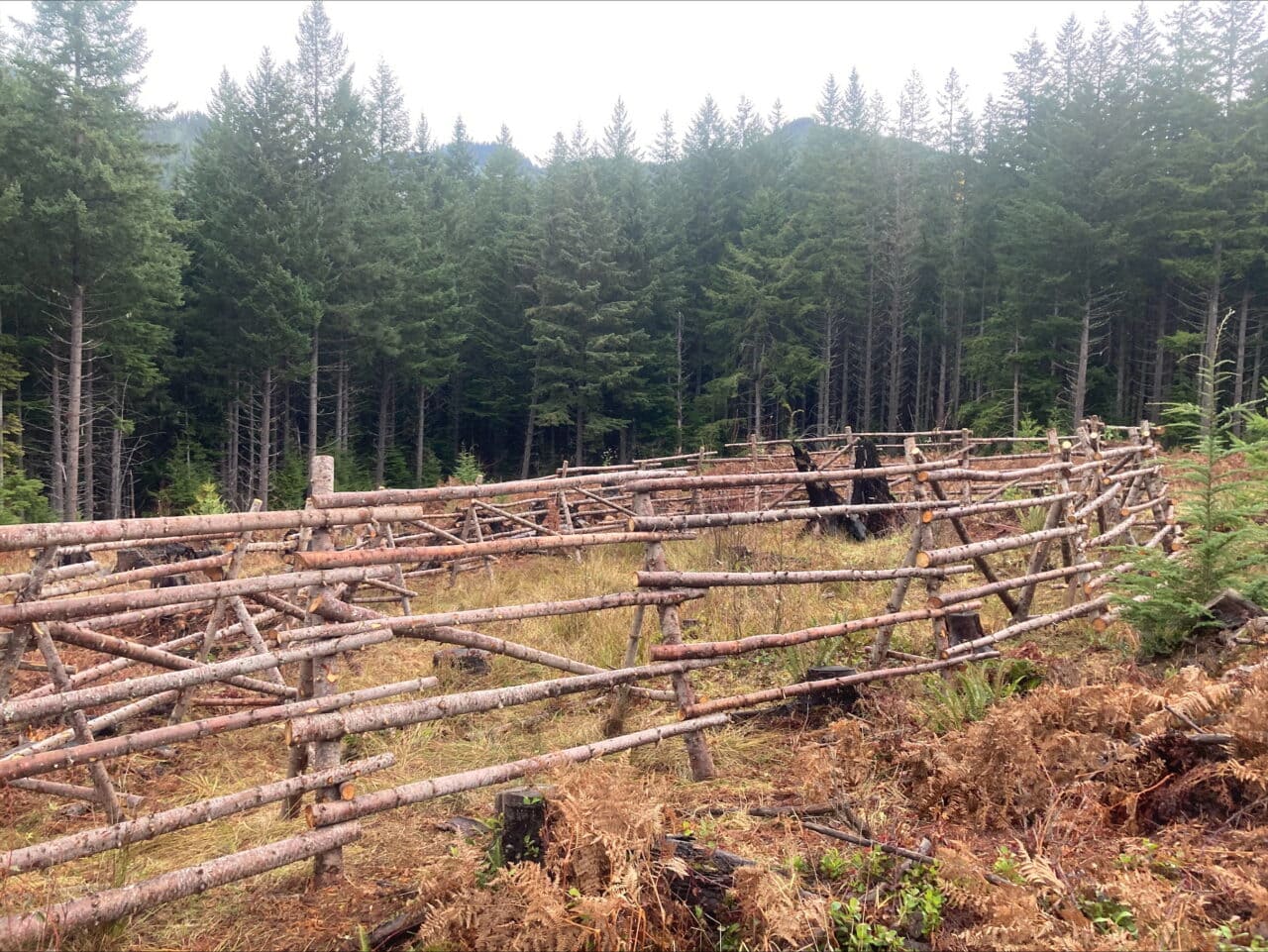
In coordination with the district biologist on the Mt. Baker-Snoqualmie, we have been focusing on habitat for deer and elk by working diligently to improve additional shrub and forage diversity. Permanent openings in second growth forest referred to as ‘elk forage units – or EFUs’ are designed to provide early seral plant communities for deer and elk, a priority for the local tribes in the region. Through support from staff at Washington Dept. of Fish & Wildlife, Muckleshoot Tribe, and a week of WCC crew time, we sourced materials to build a buck and rail fence over 7ft tall to create an exclosure to protect native plants as they become established. Sourcing materials required cutting out hundreds of lengths of fencing rails, and customized bucks that reached 7 1/2 ft in height.
This also had the added benefit of reducing the fuel loading in a high elevation stand on a ridge, which had previously been thinned of non-commercially viable timber. The logs had been left scattered sometimes 6-7 deep, restricting movement of wildlife and preventing shrubs and groundcover from thriving. Our completed exclosure will allow native plants and shrubs to become established without intense browse pressure for a few years. With the botanist we then harvested live stakes and planted red elderberry, red osier dogwood and Scouler’s willow. These shrubs will be able to grow without intense browse from deer and elk and establish a root system, then can provide a seed source, live stakes or be transplanted out into many of the other openings to provide more diverse forage options.
Along with this work an additional 7 ½ ft tall fence was built around a stooling bed where more live stakes can be rooted, grown out, then transplanted into Elk forage units and riparian areas in need of restoration support.
Plantation Stand Exams
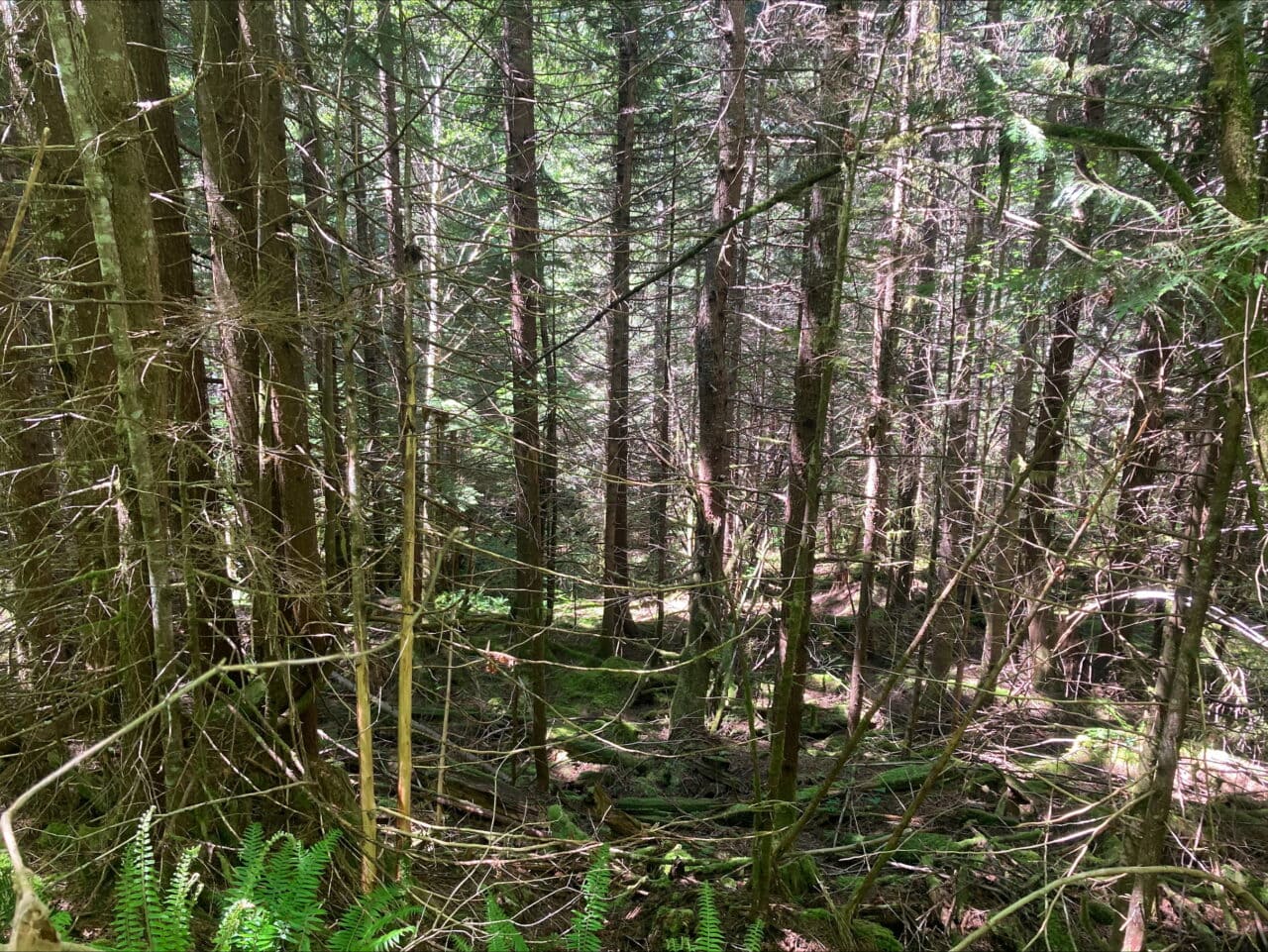
Conservation NW staff was joined by WDFW staff over multiple field days to record stand level data for future non-commercial thinning contracts. Shaped by a legacy of clearcutting for timber value, treating with herbicide to kill off any deciduous trees, overplanting and natural regeneration, these forests have upwards of 6,000 trees per acre. Many stands were planted forty years ago, with intention to thin at 15-20 years to create tall straight trees with no competition, but this vital step in the industrial forestry model was skipped, forgotten, or de-prioritized. These overcrowded conditions are in stark contrast to what we’d normally associate with a healthy forest. They are dark, starving at the forest floor of sunlight where no understory plants can grow, single age, dominated by one or two tree species & over-stocked with small diameter trees.
A normal mature westside forest on its way to becoming old growth contains anywhere from 90-200 mature and larger diameter trees per acre, with a multi-story structure and different age classes, gaps in the canopy, understory plant communities, and standing snags or dead trees and down logs on the ground. The overly simplified plantation stands exist across the forest by the thousands of acres, with no value in the small diameter of timber and no funding or priority to get them back onto a more natural trajectory. Our objective is to bring in outside funding, work with partners, and hire contractors to thin these stands away from their current overcrowded conditions. Ideally, this work would be prioritized while adjacent commercial thins are carried out, utilizing funding to carry out this habitat work that would improve forest conditions by creating openings in the canopy to promote understory plant diversity and larger trees.
The urgency and the scale of need on the ground is expansive across our westside forests.
However, due to loss in staffing capacity, direction to narrow focus and no funding to prioritize this important work needed on the ground is stagnating.
Restoration Implementation Planning
Last year we repaired an unauthorized jeep trail that went through the stream of Lion’s Gulch, protecting fish and nearby stream corridor from damage and human disturbances. In doing so, we identified the next site further down that would benefit from floodplain enhancement efforts.
This fall we worked diligently to align our objectives with USFS staff specialists and WDFW to ensure we were all on the same page. Plans were approved, and we met with our contractor for site walk-throughs. Scheduling wise, a larger scale projects took precedent, and by the time our contractor could get us scheduled we were faced with 43 days of government shutdown and unknowns if our work invoices would be honored by the federal government during that timeframe. The weeks after we saw holidays and some of the worst weather patterns hitting the cascade mountains, road washouts, soil saturation and high winds meant we would be implementing this project next year,
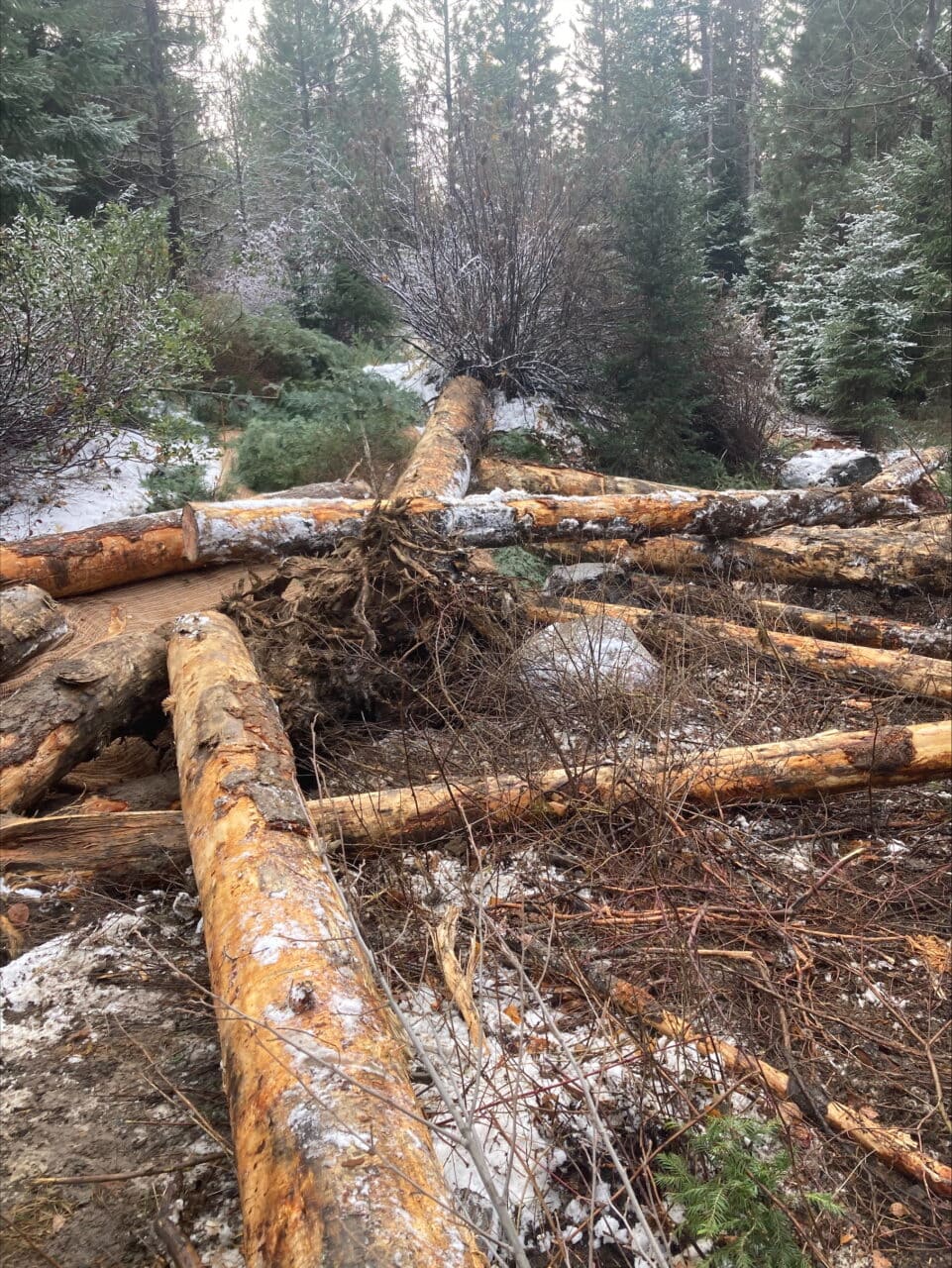
While implementing the project didn’t play out as we’d hoped, we have strong direction to move this forward this year, and the floodplain will receive 30-40 large logs to slow the water, capture sediment, and provide a diversity of habitat for both aquatic and terrestrial species.
This is the second contribution to our three-part series on adapting to the changing dynamics with Washington’s National Forests. To read the first entry, check out Matt Danielson’s blog “White House Ignites Fire Under Forest Service and Torches our National Forests“