When the Smoke Settles: Standing With Our Neighbors
Working ranches and farms keep open, connected country intact, and the people who run them are some of the most important partners in caring for this region. Helping them through a disaster is good for people and good for the land.
Published on
Nov 26, 2026

It was an incredibly hard summer in north central, central and eastern Washington. Fire after fire burned across the landscape we love, and the people who live here were not spared. Among them are our own colleagues, some of whom lost property, were evacuated, or watched friends and family face the flames.
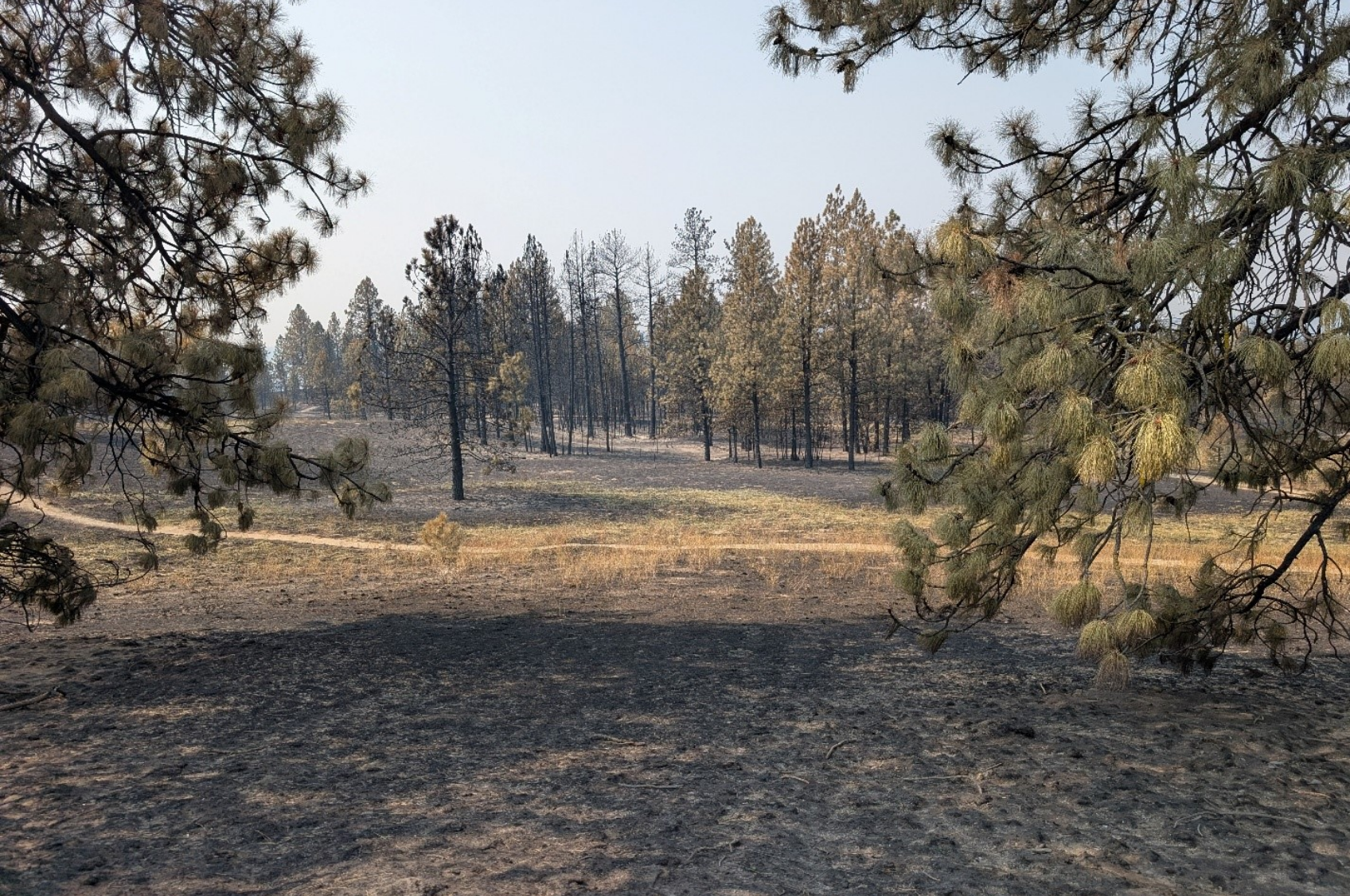
The scale of it is hard to take in. The Sinlahekin Fire, which started in late July near Tonasket, grew to 166,007 acres. The Kaiser Canyon Fire, which burned across the Colville Reservation near Nespelem, reached 138,293 acres. The Little Giant Fire above Lake Chelan burned 172,912 acres and became the largest fire ever recorded in Chelan County. In Spokane, the Old Trails Fire was far smaller in acreage but devastating in a different way, destroying around 700 homes. These were only a few of the many fires burning across the region at once.
Behind every one of those numbers is a family deciding what to load into the truck, a rancher wondering how to feed animals with the pasture gone, a neighbor opening a barn or a spare room for someone they may barely know.
Living with fire
Fire is hard on the people it touches, and that is true even for those who have lived through it before. Fire is also a part of life out here. Our forests, shrub steppe and grasslands evolved with it, and many communities in this region have long known the rhythm of fire season. But a changing climate is making that rhythm harder to live with, as fires burn hotter, move faster and grow larger than many of us remember.
It’s also true that not all fire is bad. Fire can renew soils, open up habitat and help some ecosystems thrive. What matters is how a fire burns, and where. We are still assessing what happened this summer, and what these landscapes need now to recover.
Why hay
When fire sweeps through rangeland, ranchers lose more than fences and grass. They lose the winter hay they put up and the pasture their animals depend on. Without feed, they face painful choices: sell off livestock, or turn hungry animals onto burned ground that desperately needs rest.
That second part matters for the land itself. Scorched slopes and rangelands are fragile. Soils are exposed, and native grasses and shrubs need time to come back. Grazing pressure on freshly burned country can slow that recovery. Getting hay to producers helps keep animals off the burned areas while the landscape heals, and it helps families stay on the land they steward.
This is part of why Conservation Northwest works with agricultural producers year-round. Working ranches and farms keep open, connected country intact, and the people who run them are some of the most important partners in caring for this region. Helping them through a disaster is good for people and good for the land.
What we were able to do
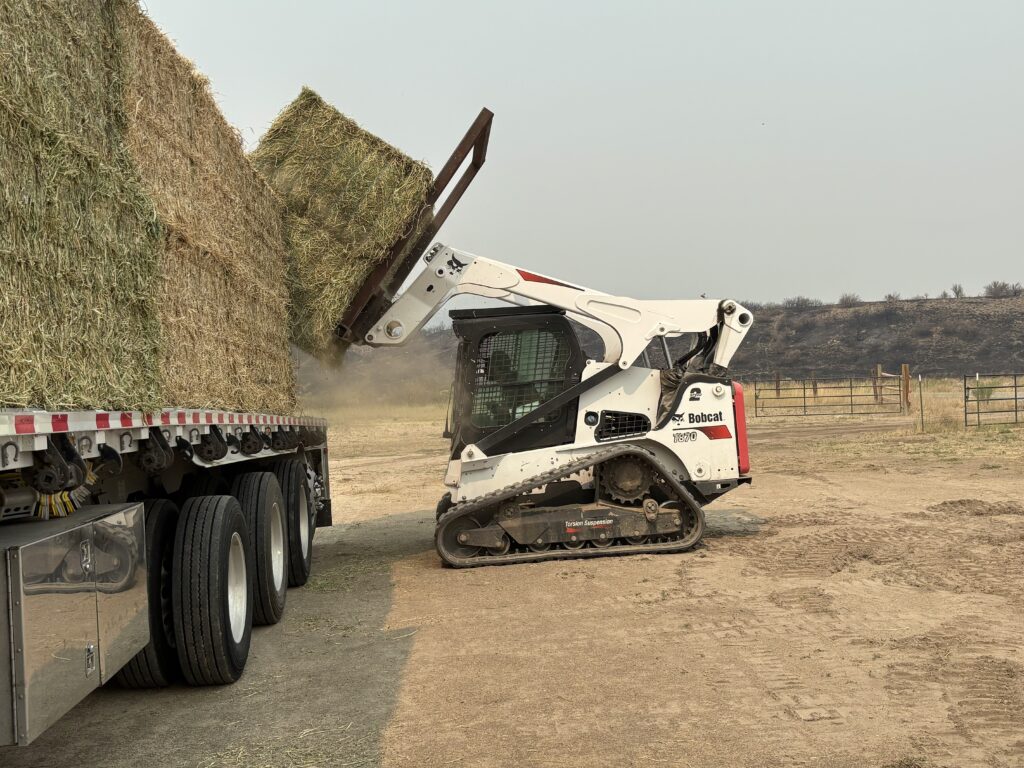
On August 9, we delivered 26.6 tons of hay to Nespelem on the Colville Reservation. Marc Gauthier, our Cascades to Olympics Program Senior Manager, arranged the delivery and handled all of the logistics, moving quickly with the support of our leadership team. Representatives of the Confederated Tribes of the Colville Reservation shared their sincere gratitude, and the need in rural communities that lost both pasture and winter hay supplies remained tremendous.
A few days later, Marc kept the effort rolling with a second load. We helped deliver another 27 tons from Deer Park to a ranch outside Tonasket, hauled by semi on a four-hour trip each way. The Okanogan Cattlemen’s Association chose the rancher to receive the hay and share it with others as needed. Jay Kehne, our Sagelands Heritage Associate Director, was there for the delivery alongside Chris Branch, a past Okanogan County Commissioner, and says he can’t remember being hugged so hard by a rancher as he headed out.
Partnerships make the difference
None of this happens alone. The hay deliveries came together because ranchers, cattlemen’s associations, tribal representatives, agency staff, truckers and neighbors all pitched in. We also worked with the Okanogan Cattlemen’s Association, the Farm Bureau and virtual fence vendors on a post fire workshop in Omak, and with Washington Department of Fish and Wildlife as it matched producers with pastures for emergency grazing and explored how virtual fence could open more options.
Looking ahead
Recovery will take a long time. The full needs of these communities will become clearer in the months ahead, as people assess what they’ve lost and what it will take to rebuild fences, pasture and livelihoods. We don’t have all the answers yet, but we know our commitment to this landscape and the people who call it home is a long one.
Conservation Northwest will continue to support producers as needs emerge. If you’re interested in contributing to these efforts, please reach out.
Watch for the last post in this series, which will look at how landowners restore their land after fire.
Thank you for caring for this place, and for one another.