Wildlife Connectivity: A Bird’s-Eye View
Published on
Nov 25, 2026

by Jen Syrowitz, Director of Landscape Strategies
When it comes to proposals about possible locations for wildlife crossings, two of the main questions we hear from lawmakers are: how do we know it will work and what could it mean for the people who own land on either side of the highway? In seeking to answer those questions and provide a better framework for understanding the complexities of connectivity, we decided to look at it from a different perspective: the air.

This past year, Conservation Northwest staff organized and led a series of five “Safe Passages” field tours across Washington landscapes. State legislators, congressional staff, local decision makers, landowners, Tribal leaders, agencies, and partners were invited to explore three transportation priority locations identified in the Washington Habitat Connectivity Action Plan: I-5, I-90, and US 97. We partnered with LightHawk, a conservation-focused, aviation nonprofit that works with environmental groups, researchers, and government agencies across North America using volunteer pilots and aircraft for aerial surveys, wildlife recovery, and conservation flights. The purpose was to build champions for the Safe Passages bill we will be working to pass in the 2027 legislative session, and for the funding it takes to operationalize habitat corridor and transportation crossing work on the ground.

During our first Safe Passage tour this summer, a volunteer pilot took staff from Congresswoman Schrier’s office over the Keechelus Wildlife Overcrossing east of Snoqualmie Pass. There they could see where elk and other wildlife cross above six lanes of I-90. Next, they flew south over I-5 near Olympia to see where we’re working to give wildlife that same opportunity, reconnecting populations between the Cascades and Olympic Peninsula.
On our flights over I-5 between Olympia and Portland, we could see why those initial questions belong together. Following a band of forest towards the freeway, we looked out across the sprawling lanes of traffic to see where a deer might go once it reached the opposite side of the highway. This view helped to explain why we care as much about the habitat corridors approaching transportation infrastructure as we do about the crossings themselves. It also raised practical questions for a landowner. Where might fencing go? How would someone get into their field or driveway? Those are conversations we have with the people who know and work the land while we are helping shape a project.
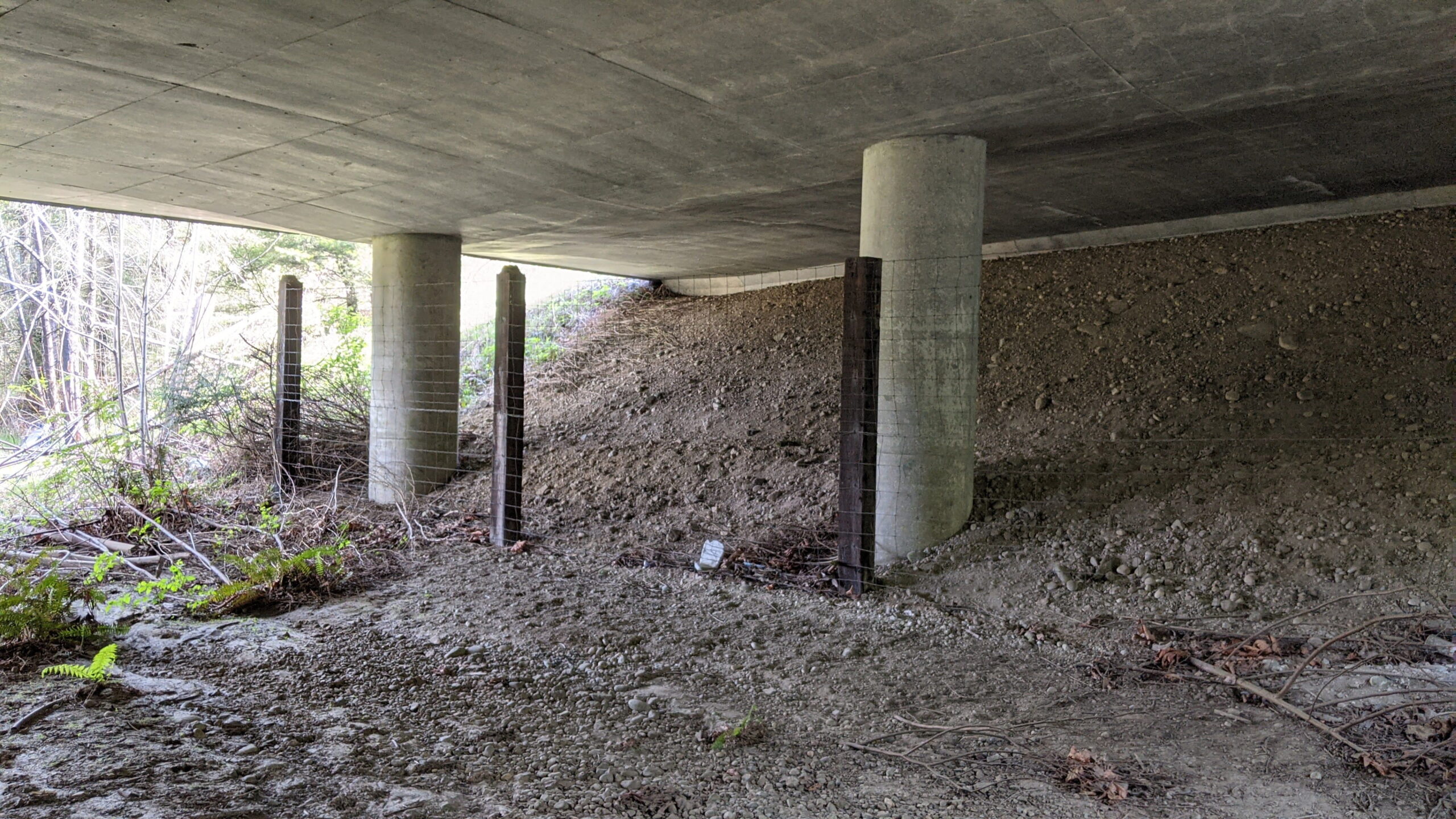
At I-90, we toured the wildlife overpass and undercrossings from the ground, finding tracks and frogs. Along US 97 in the Okanogan Valley, we were able to provide real time examples of crossing effectiveness. Mule deer, bobcat, and other species already use the undercrossing at Janis Bridge, a structure Conservation Northwest helped to retrofit for improved wildlife passage. Lawmakers also had the opportunity to hear from three different landowners about their thoughts concerning safe passage. One couple recalled a time, recently, when a moose was struck and killed in front of their driveway. All three individuals strongly supported the addition of more crossings, fencing and associated infrastructure.

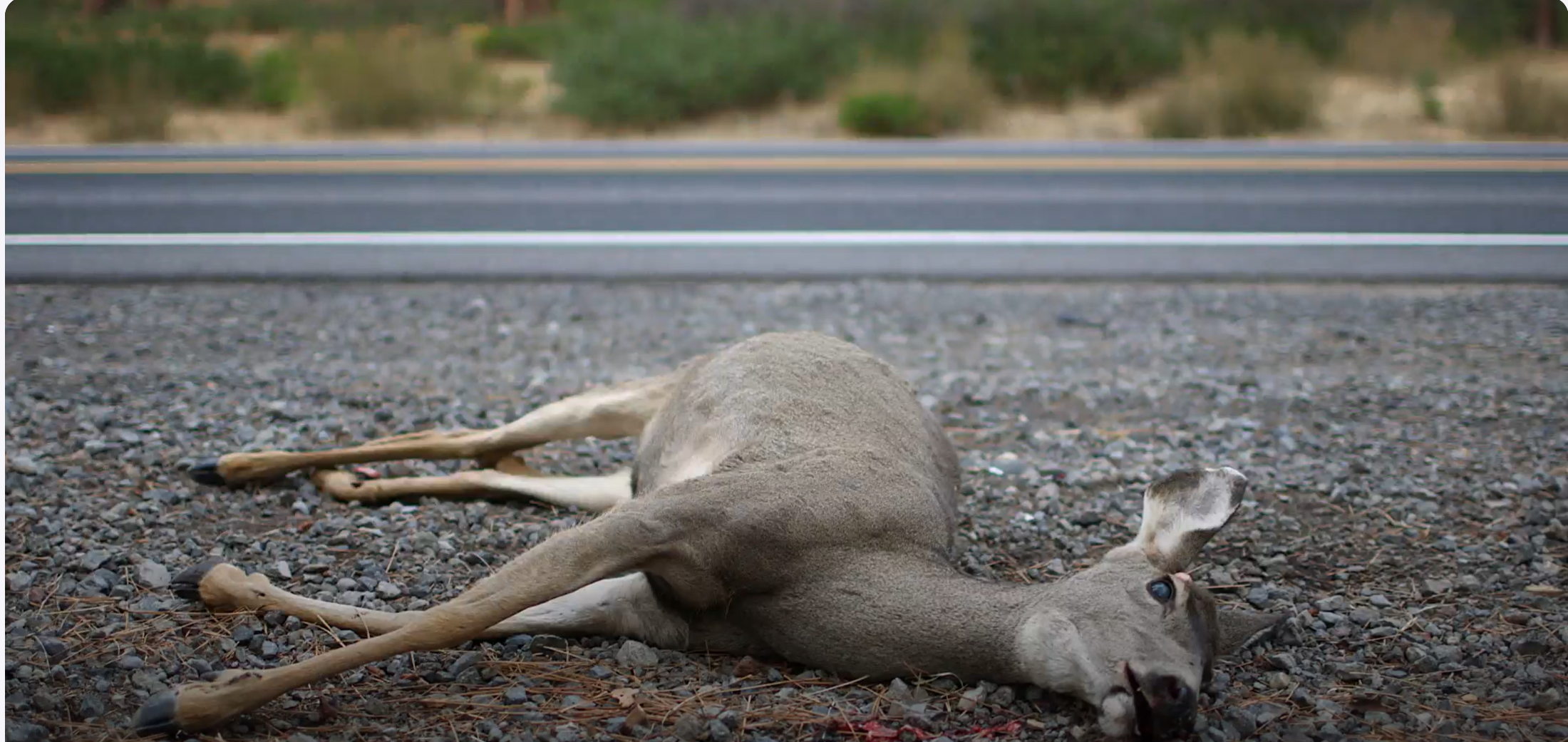
Another question that surfaced regarded human safety: for people driving between Riverside and Tonasket, will additional crossings and the fencing that guides deer to them, reduce the chances of hitting a deer on that dangerous stretch of highway? Both kinds of evidence matter to us: wildlife getting across and people traveling safer. Species data and wildlife-vehicle collision data adjacent to Janis Bridge suggests that both wildlife and people are safer and benefit from this work. Since fencing was added at Janis Bridge in 2020, WSDOT has recorded a 91 percent drop in wildlife-vehicle collisions there, and cameras document more than 2,000 wildlife crossings a year.
Over the five tours, we welcomed the state directors for Congressman Larsen and Congresswoman Schrier, along with state Senators Victoria Hunt, Javier Valdez and Shelly Short, and Representatives Zach Hall, Ed Orcutt and Andrew Engell. Washington’s Secretary of Transportation, Julie Meredith, and her staff joined us for an I-5 flight. By the end of the field tours, lawmakers had their answers: decades of science and examples from around the world, including ongoing monitoring at the I-90 Snoqualmie Pass crossings has proven the effectiveness of wildlife crossings, and many landowners are eager to see additional infrastructure built to ensure the safe passage of both wildlife and people.

When we sit down with lawmakers this winter, we will pick up a conversation that started in the air and on the ground. Our hope is that when a colleague asks whether crossings work or what a project means for a neighboring landowner, someone who joined us can say, “Let me tell you what I saw.”
We are so grateful to everyone who took the time to go out into the field, and to LightHawk for getting us in the air.