


Impact & Results
A History of Interstate 90 - Central Cascades
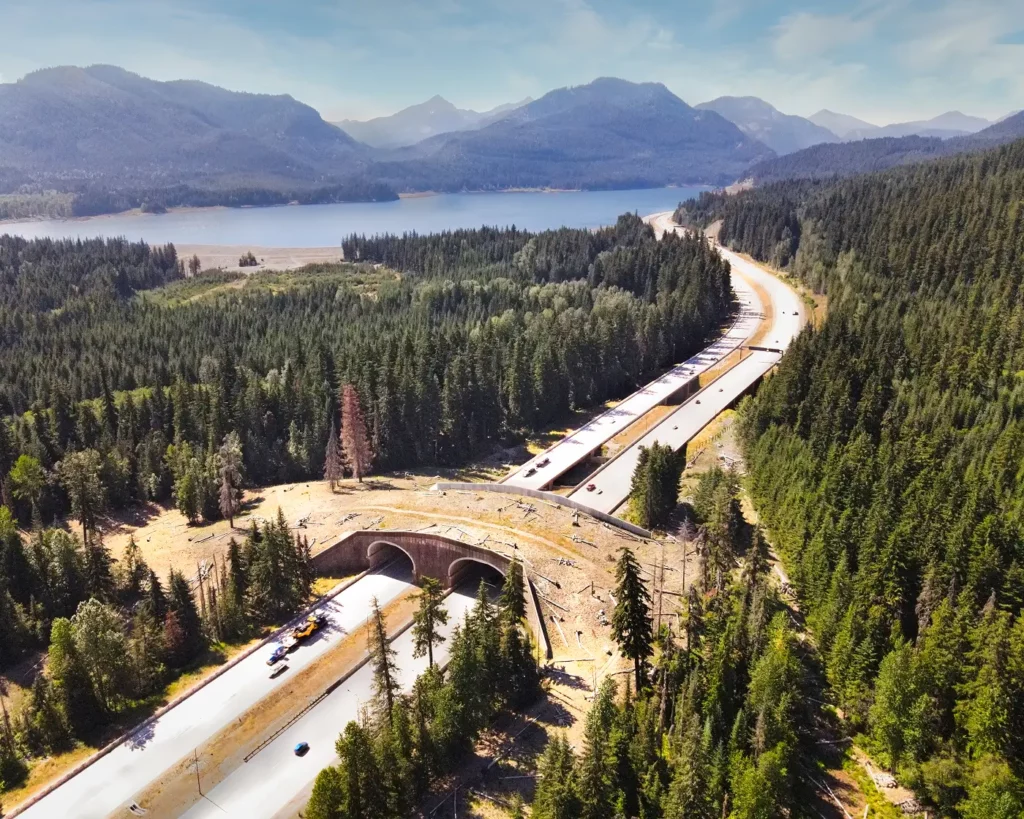
For more than two decades, partners have worked to reconnect habitat across I-90 at Snoqualmie Pass. Through sustained advocacy, infrastructure investment, and scientific monitoring, the corridor has become a leading example of wildlife connectivity and transportation planning in North America.
Advancing safe passage through long term partnerships and advocacy
Ongoing construction to expand connectivity across the Cascades
Documented success through scientific monitoring
Advancing safe passage through long term partnerships and advocacy
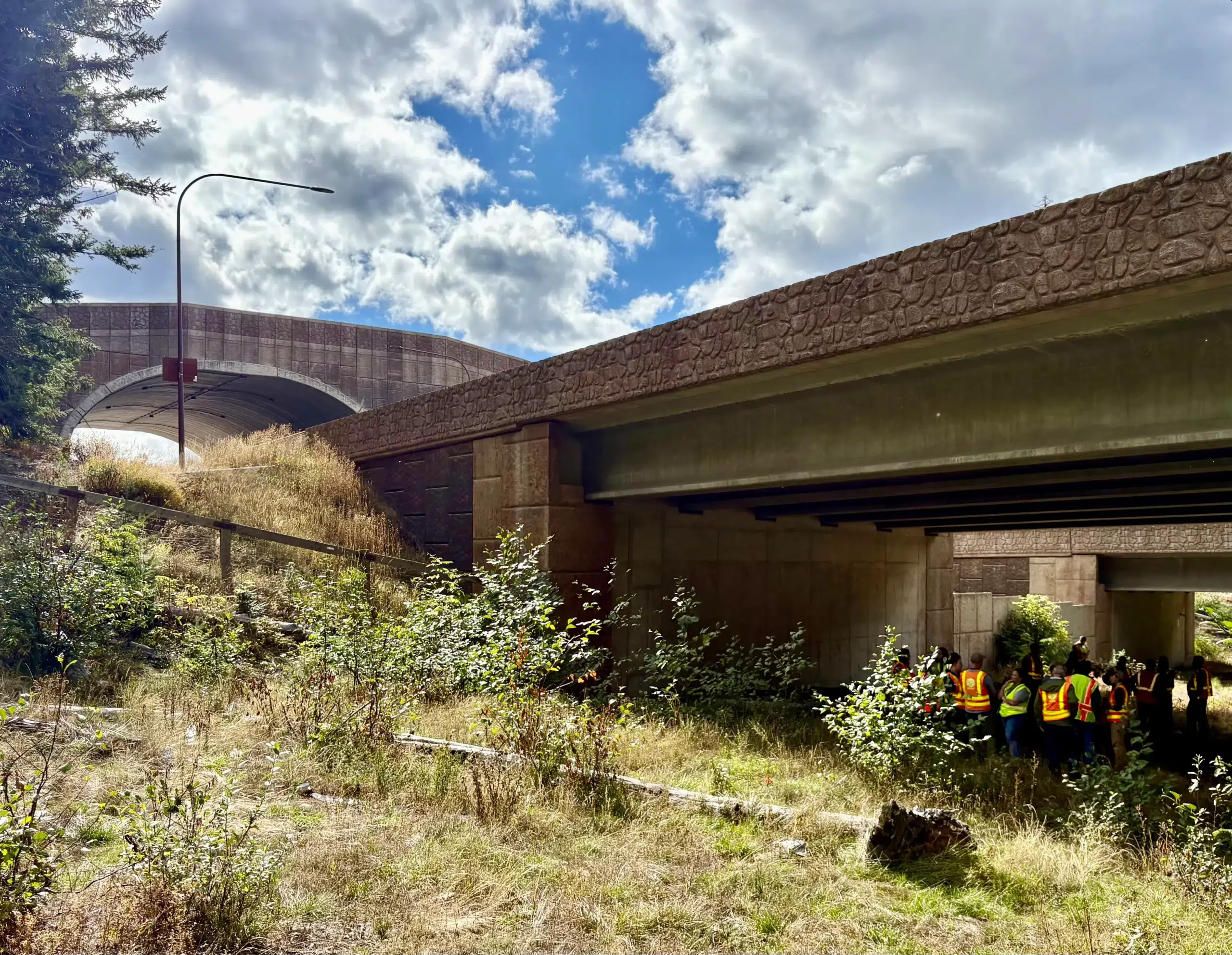
Through the historic I-90 Wildlife Corridor Campaign and the I-90 Wildlife Bridges Coalition, Conservation Northwest has worked with WSDOT, elected officials, and community partners to make the Snoqualmie Pass corridor safer for wildlife and people. Phases 1 and 2 of the Snoqualmie Pass East Project are complete, including Washington’s first wildlife overcrossing built in 2018.
Ongoing construction to expand connectivity across the Cascades
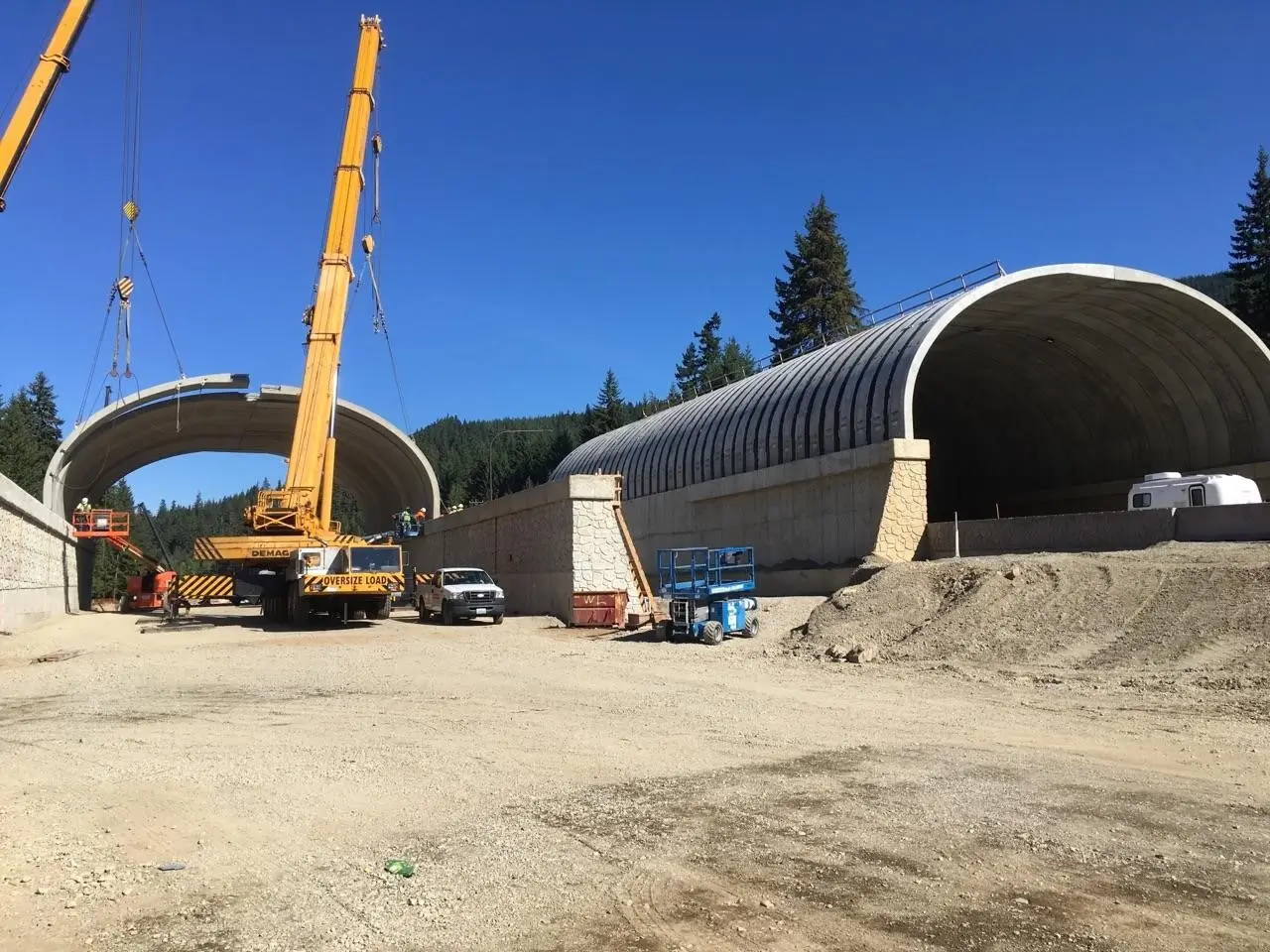
Phase 3 of the project is now underway, widening the highway, straightening curves, and replacing bridges and culverts. By 2031, this 15 mile, $1 billion phase will add 16 additional wildlife crossings, significantly expanding safe movement opportunities across the Cascade Crest.
Documented success through scientific monitoring
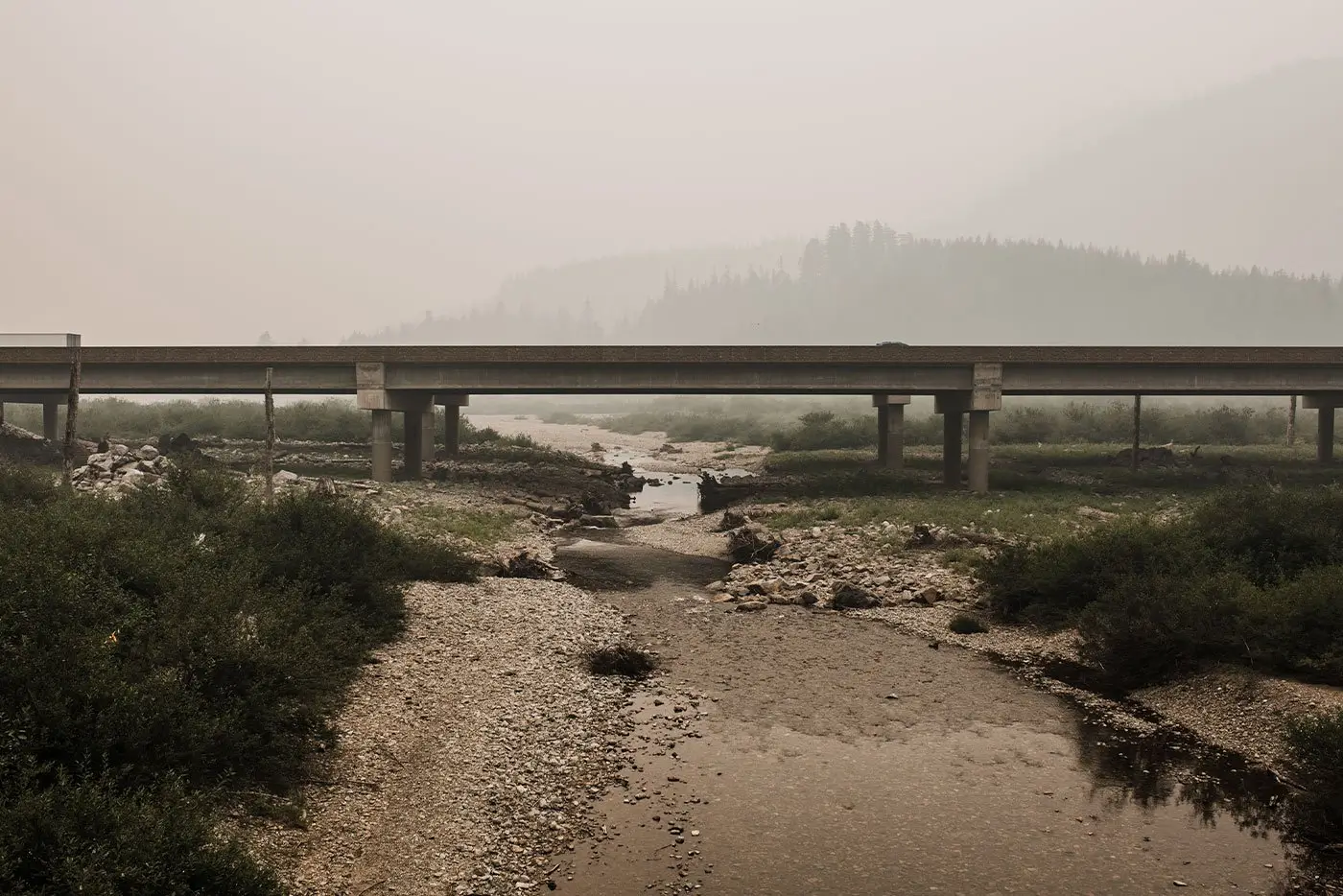
Central Washington University researchers have recorded more than 5,000 animals using the I-90 wildlife crossings each year. These numbers do not include many small mammals and low mobility species—such as northern flying squirrels, Pacific tree frogs, banana slugs, and coastal giant salamanders—that often go undetected by cameras, indicating the true usage is even higher.
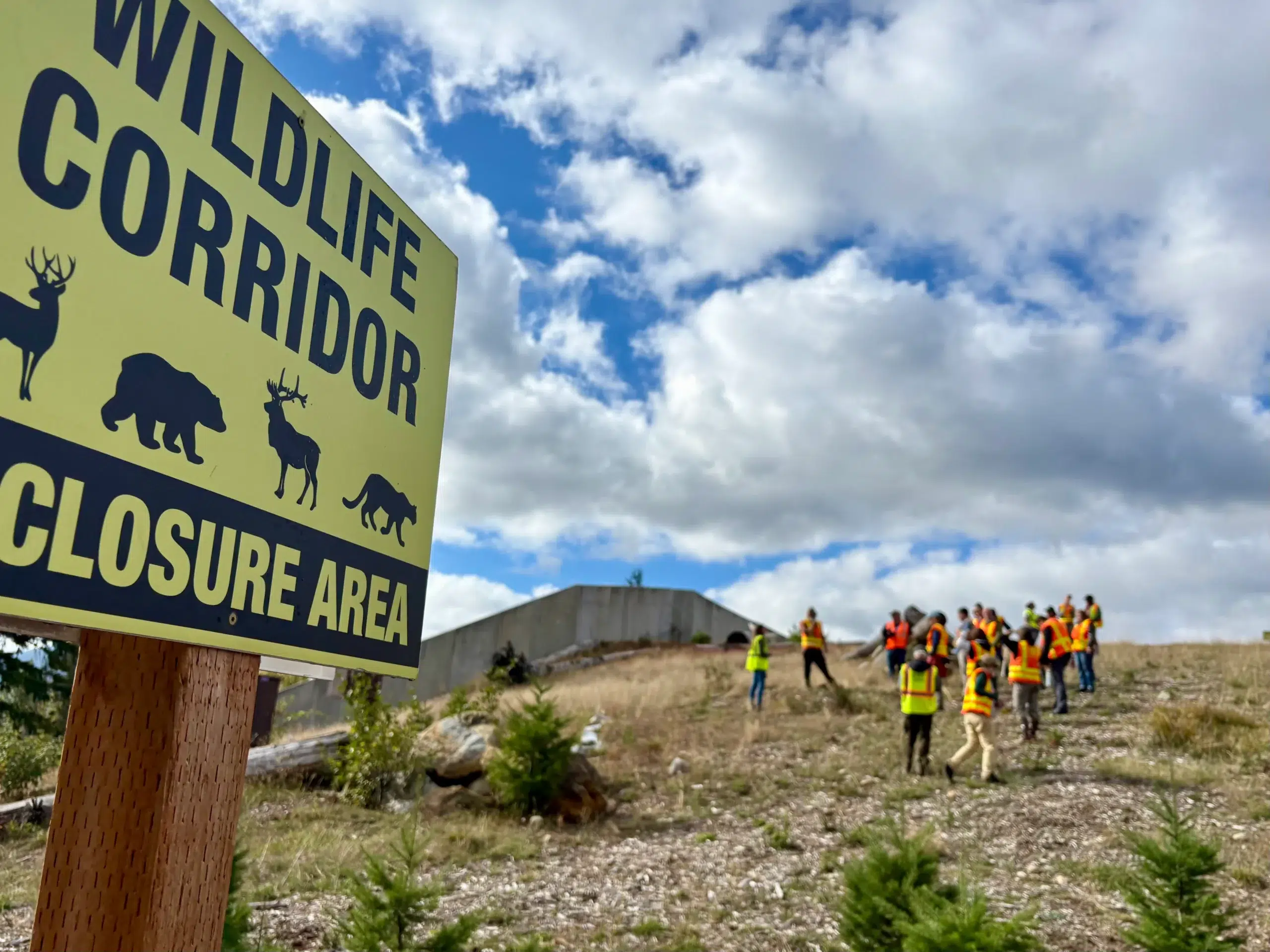
Wildlife Bridge
Helping Build Washington’s First Dedicated Wildlife Overcrossing
In 2018, the program helped secure the political, social, and funding support needed to build Washington’s first dedicated wildlife bridge, reconnecting core habitat across the Cascade Crest at Snoqualmie Pass.
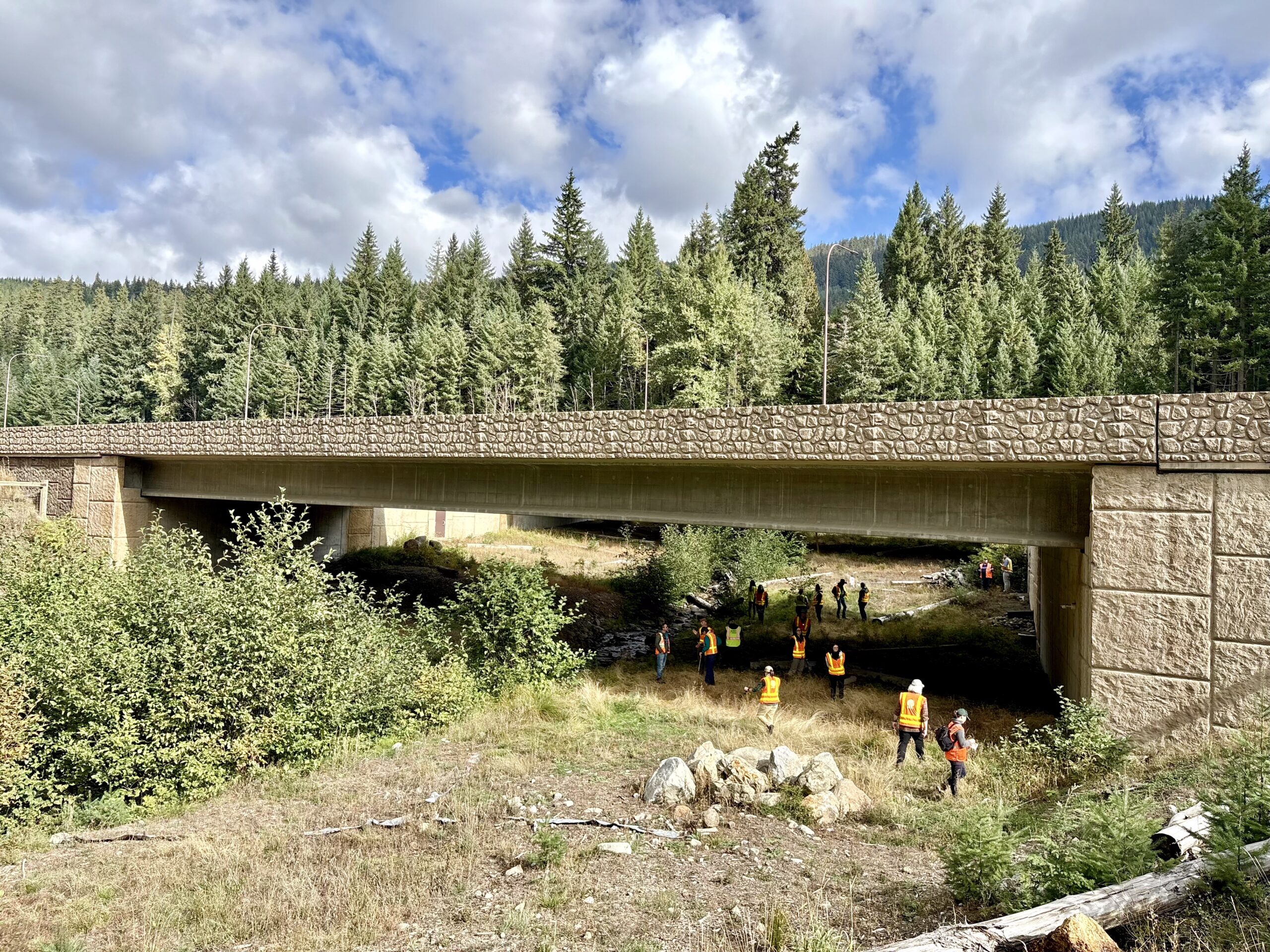
Habitat Restoration
Revegetating Crossing Structures to Improve Wildlife Movement
Since 2015, the program has supported revegetation around I-90 crossing structures, planting more than 80,000 native plants to create natural cover and improve wildlife use of the overpass and underpasses.
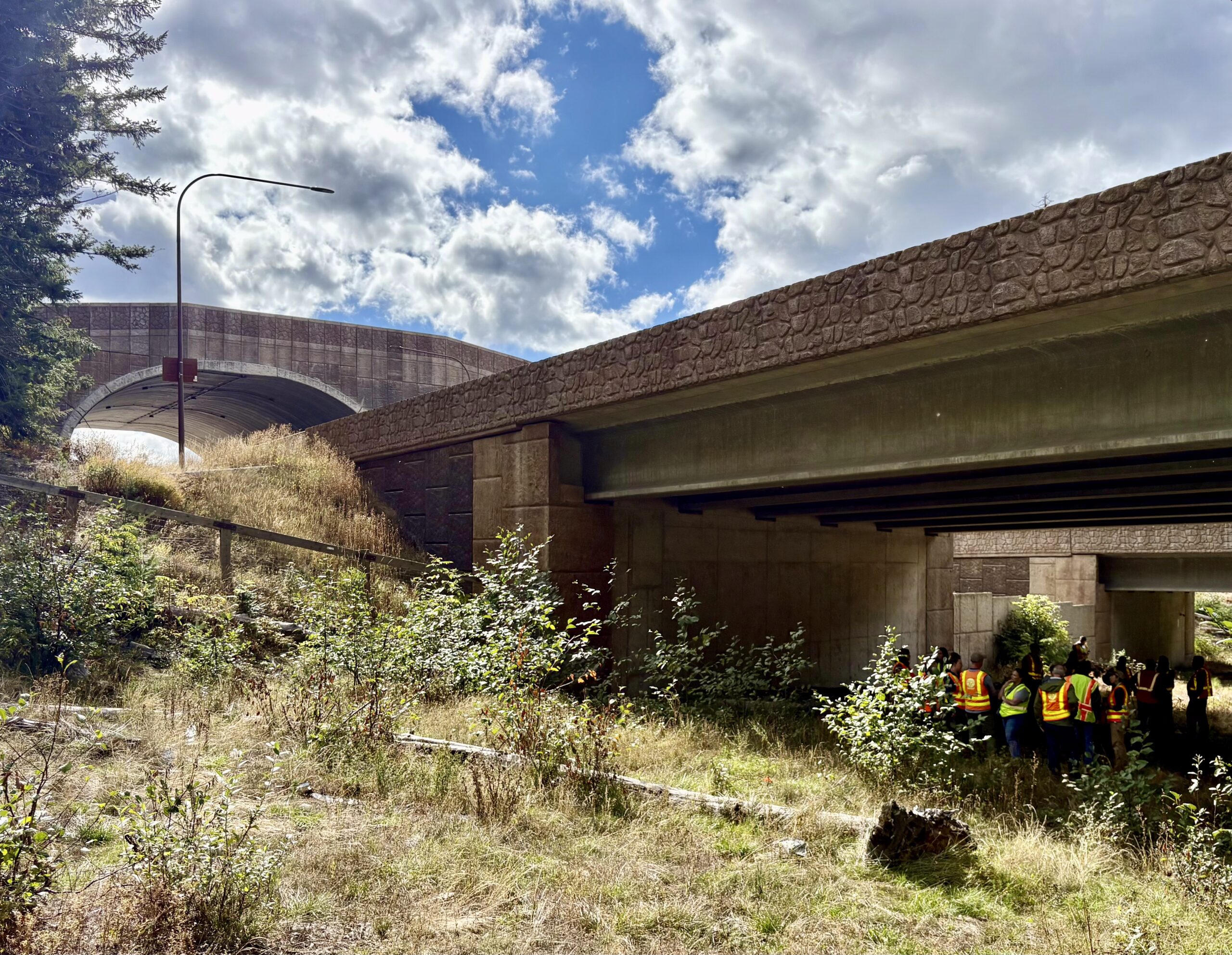
Undercrossing Improvements
Enhancing the Milepost 27 Crossing for Safer Wildlife Passage
The program has improved the historic Milepost 27 undercrossing, organizing volunteer work parties to clear blackberry and dense brush, restoring the open sight lines needed for elk and other species to safely move through.


