Impact & Results
A History of Fisher Work
The recovery of fishers in Washington is the result of decades of conservation planning, scientific research, and coordinated reintroduction efforts. Understanding the species’ decline and the steps taken to restore it provides important context for one of the state’s most successful wildlife recoveries.
Historical Extirpation and Loss of Breeding Populations Across Washington’s Forested Landscapes
Scientific Foundations and Policy Framework Establishing Fisher Reintroduction Strategy in Washington State
Current Conservation Status and Ongoing Recovery Responsibilities Under Federal and State Protections
Historical Extirpation and Loss of Breeding Populations Across Washington’s Forested Landscapes
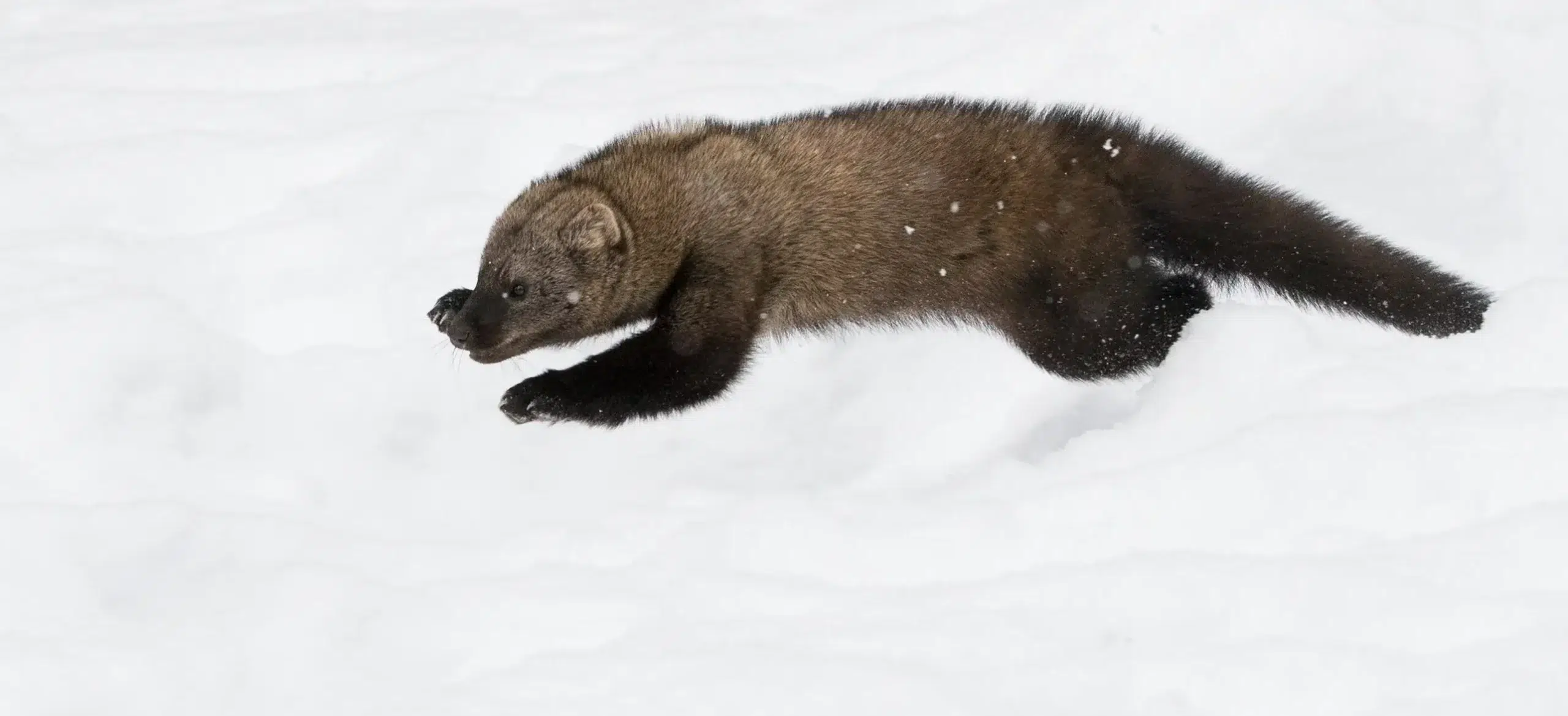
Fishers were completely extirpated from Washington by the mid 1900s due to unregulated trapping, predator control campaigns, and widespread habitat loss. For decades, no breeding population remained anywhere in the state, leaving only scattered historical records and making Washington entirely dependent on reintroduction to restore the species.

Scientific Foundations and Policy Framework Establishing Fisher Reintroduction Strategy in Washington State
A 2002 feasibility study and the 2006 Washington State Fisher Recovery Plan established the scientific and policy framework for reintroducing fishers, identifying suitable habitat, population targets, and long term monitoring needs. These documents created the foundation for multi-year reintroduction efforts across the Olympics and Cascades and remain the guiding framework for recovery today.

Current Conservation Status and Ongoing Recovery Responsibilities Under Federal and State Protections
Fishers are now listed as endangered in Washington and federally listed as threatened under the Endangered Species Act, reflecting ongoing vulnerability to habitat fragmentation, incidental mortality, and limited population size. These protections require coordinated recovery actions, long term monitoring, and habitat stewardship across federal, state, Tribal, and private lands.

Olympic Reintroduction
Establishing a self-sustaining fisher population on the Olympic Peninsula through early reintroduction efforts
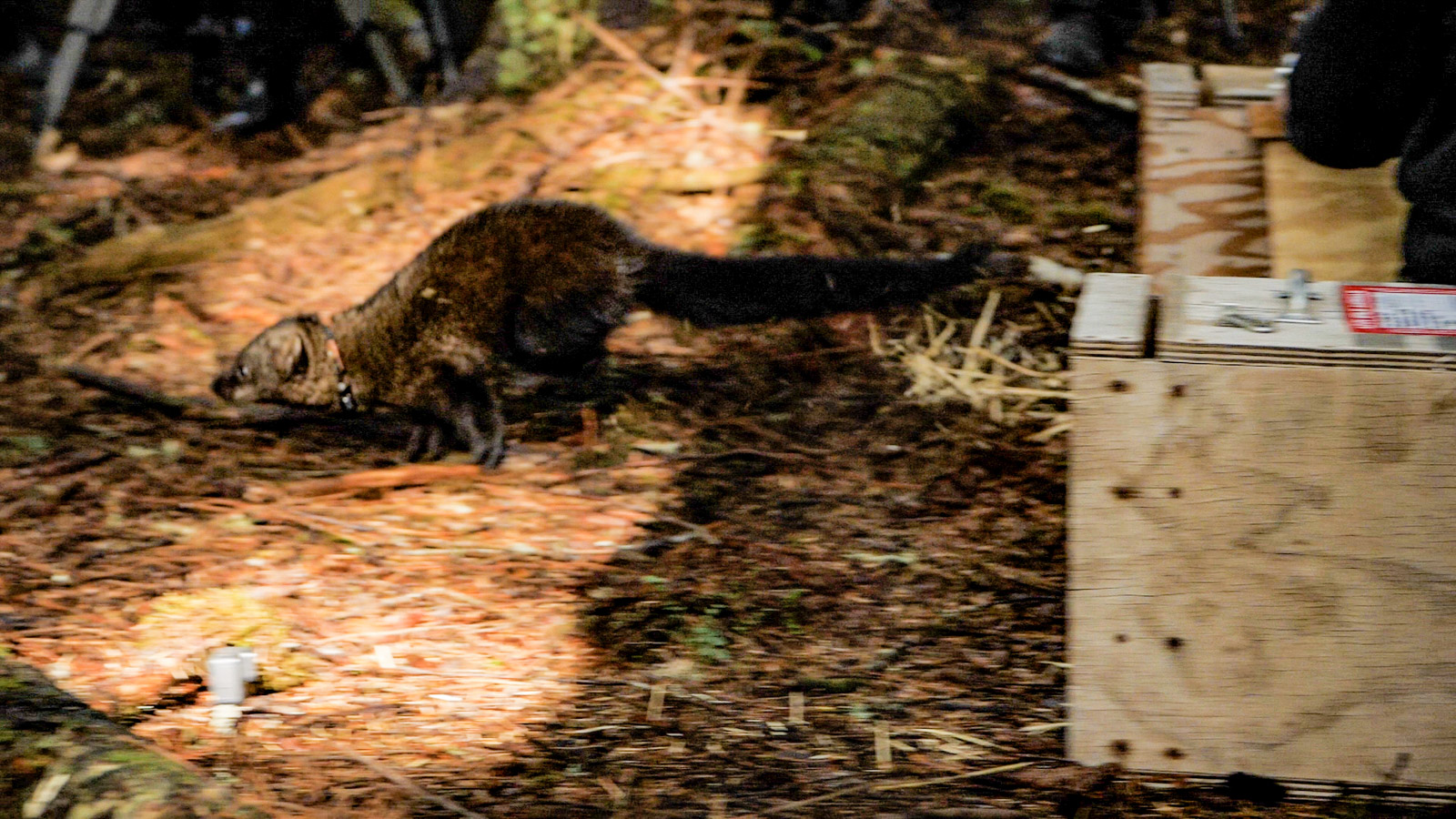
Following the 2002 feasibility study and 2006 recovery plan, 90 fishers were released on the Olympic Peninsula between 2008 and 2010, establishing a population that has since been confirmed reproducing and dispersing, with an estimated 120 animals on the peninsula by 2017.

Cascades Expansion
Expanding fisher recovery into the South and Central Cascades with successful multi-year reintroduction
From late 2015 through early 2017, roughly 80 fishers were reintroduced to the South and Central Cascades, first on the Gifford Pinchot National Forest and then in Mount Rainier National Park, with reproduction documented and individuals now ranging from Mount Adams to the I 90 corridor.

Cascades Completion
Completing multi-region fisher restoration efforts across Washington’s historic range after wildfire delays
Supported restoration treatments across priority landscapes around the Kettle Crest and Colville region, improving habitat resilience for lynx, mule deer, and wide ranging carnivores while reducing catastrophic wildfire risk. Staff consistently bridged policy and implementation by securing funding, aligning partners, and moving projects through NEPA into on the ground action.

Fisher Facts
Behavioral and physical traits that make fishers skilled forest-dwelling carnivores
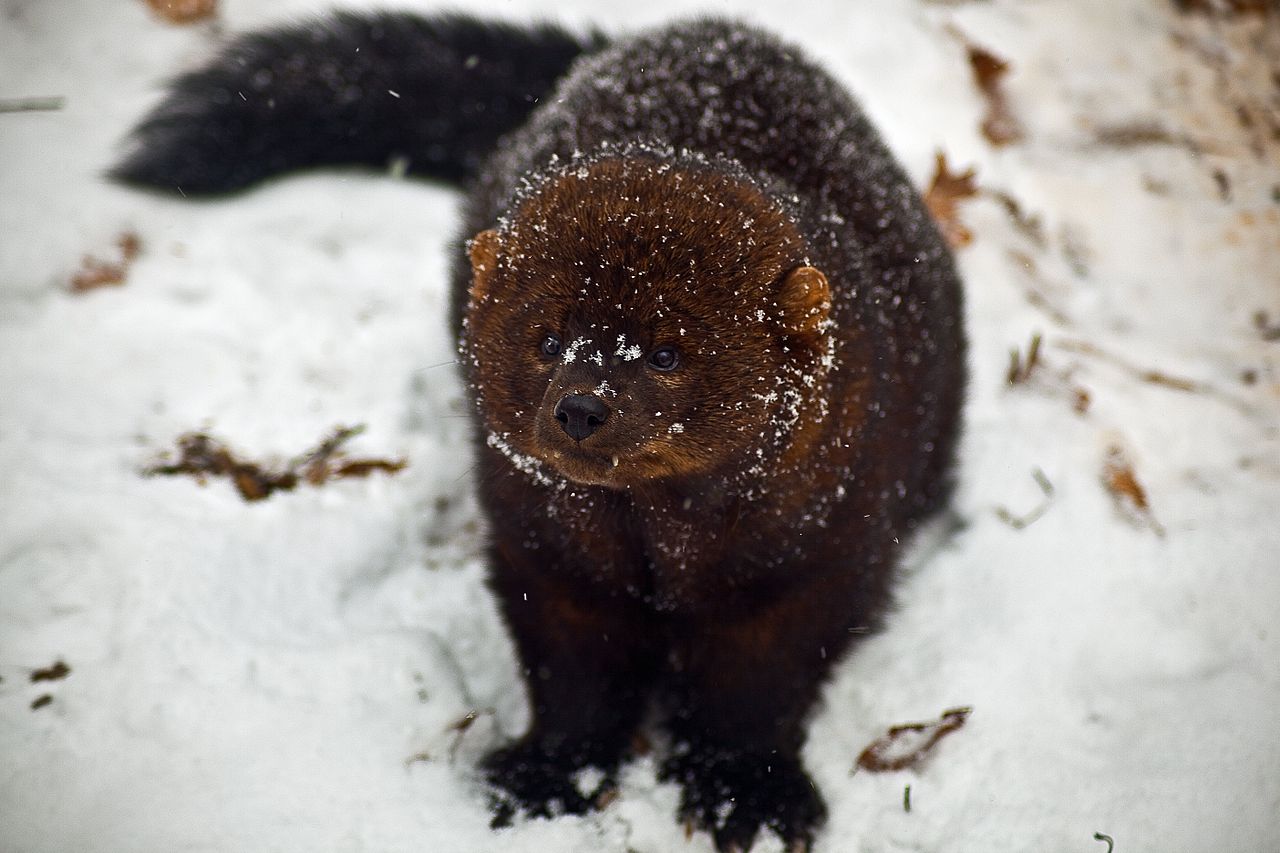
- Like most species in the weasel family, fishers (Martes pennanti) are successful hunters, curious and intelligent. And they are excellent tree climbers.
- Fishers have important cultural values for some Native American and First Nations cultures.
- Even in areas where they are relatively abundant, fishers are secretive and rarely seen.
- Fishers favor older forests with high canopy cover, and mature and old-growth forests. They rest, nest and take cover in downed wood, high cavities in dead tree snags and clumps of tree branches.
- Fishers are carnivores, hunting and eating small mammals like mountain beavers. Like other carnivores, they also relish carrion (a lot less work!). Fishers are one of the only forest carnivores known to hunt porcupines–no small feat.
- Fishers range across North America where they haven’t been wiped out locally. People have named them many things, including black cat, fisher cat, pekan, pequam, wejack and woods-otter.
- Fishers are creatures of the forests, not water, and their favorite foods are small mammals, not fish. Their unusual common name is thought to come from the French word fichet, for the pelt of a European polecat. It may also have originated from trappers who used fish as bait to catch fishers.